Faith and Financing for Sustainable Development
Self-Paced E-Learning Course
-
At the end of this course, participants will:
-
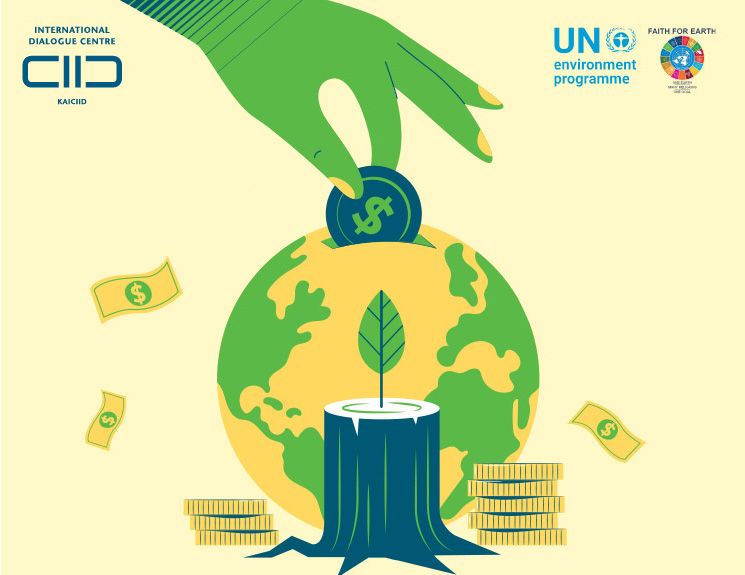
Have a clearer understanding of sustainable finance and why it is so urgently needed to tackle the world’s pressing sustainability issues.
-
Have learnt about existing concepts, mechanisms and global intiatives to expand sustainable finance, with emphasis on the role of the UN system.
-
Understand different faith perspectives on wealth and how these can be leveraged to ensure faith actors play a role in transitioning towards, and promoting, sustainable finance within and beyond their organizations.
-
Better understand how to engage in this ever-growing and developing field, as well as additional resources to engage with upon finalising the course.
Certification
A Certificate of Completion will be issued to participants who achieve a minimum total score of 70%.
About UNEP
Since its inception in 1972, the United Nations Environment Programme (UNEP) has been the global authority that sets the environmental agenda, promotes the coherent implementation of the environmental dimension of sustainable development within the United Nations system and serves as an authoritative advocate for the global environment. UNEP’s mission is to provide leadership and encourage partnerships in caring for the environment by inspiring, informing, and enabling nations and peoples to improve their quality of life without compromising that of future generations. UNEP works closely with its 193 Member States and representatives from civil society, businesses, and other major groups and stakeholders to address environmental challenges through the UN Environment Assembly, the world’s highest-level decision-making body on the environment.
The role of faith and faith-based organizations (FBOs) in sustainable development is often overlooked. However, this course has given me a new perspective and helped me realize how critical this area is to achieving the SDGs. Billions of people around the world are connected to faith in one way or another, which makes the influence of FBOs especially significant—not only in raising awareness, but more importantly in promoting sustainable investment, advancing green finance, and discouraging fossil fuel investments and greenhouse gas emissions.
Shamraiz Khan, Course Participant, Pakistan